


Empathy with Objects – Additive Manufacturing and Innovative Design”


As the annual highlight of the global design world, the Milano Design Week in April brings together renowned brands and emerging designers from around the world to showcase cutting-edge design trends. Through diverse events, it expands the boundaries of design—from urban spaces to everyday life themes—creating a creative hub that invites everyone to participate.
On April 8, 2025, the 63rd Milan Design Week grandly commenced in Milan, Italy. As a parallel core exhibition, “Empathy with Objects – Additive Manufacturing and Innovative Design” — hosted by Nanjing University of the Arts, and co-organized by its School of Design and Nanjing Kenyo Digital Additive Technology Institute — opened as scheduled.
On April 10, the exhibition was officially launched at the design week’s main exhibition area (Via Privata Dina Galli, 6, 20159 Milano MI, Italy), welcoming global designers.Running concurrently with the Milan Design Week’s main exhibitions, the showcase garnered high attention and widespread acclaim from international design experts, faculty and students of Politecnico di Milano, design professionals, and industry media throughout its duration.
The School of Design at Nanjing University of the Arts meticulously prepared for this exhibition, showcasing outstanding works across multiple disciplines, including ceramic design, wearable design, and lifestyle product design. With technical support from Kenyo Digital Additive Technology Institute, the exhibition highlighted the school’s recent achievements in digital design technology.
The works deeply integrate Eastern cultural traditions with cutting- edge global design languages, demonstrating how digital technology empowers artistic creation. They reflect the innovative exploration and high professional standards of NUA’s faculty and students within the international design discourse. Over 40 exhibited pieces illustrate the fusion of the latest digital technologies with design education, underscoring the strong driving force of Chinese culture in design pedagogy and innovation.
This exhibition interprets the resonance between advanced technology and emotional design, while emphasizing the significance and vitality of material media in contemporary design practice. As one of the highlights of Milan Design Week, it presented the world with a glimpse of the avant-garde vision of Chinese design education.
Nanjing University of the Arts (NUA) is China’s earliest independently established institution of higher art education with a century-long legacy that continues to thrive today. Co-founded by the Ministry of Culture and Tourism of the People’s Republic of China and the Jiangsu Provincial Government, it is a key institution in Jiangsu’s “Peak Plan” for high-level university development, consistently ranking among the nation’s top-tier art academies in comprehensive academic strength.
Throughout its 113-year history, NUA has upheld distinguished cultural traditions, accumulated profound heritage, and nurtured generations of outstanding artistic talents. Masters such as Liu Haisu, Yan Wenliang, Chen Zhifo, Xie Haiyan, Zang Yunyuan, and Huang Binhong once taught or studied here, making extraordinary contributions to the development of Chinese art education and laying a solid foundation for NUA’s growth.
The university comprises 16 academic units, including the School of Design, School of Fine Arts and Calligraphy, and Conservatory of Music, with over 12,000 enrolled students. It offers a complete talent cultivation system spanning undergraduate, master’s, and doctoral programs. Faculty and student works have received numerous accolades on international platforms, reflecting NUA’s commitment to integrating art with cutting-edge technology and innovation.
Actively promoting global engagement, NUA collaborates with world-leading art institutions. While dedicated to preserving China’s cultural heritage, it pioneers new frontiers in artistic innovation through a globalized lens.
School of Design at Nanjing University of Arts (NUA) is committed to the digital innovation of design education. For this exhibition, a delegation led by Vice Dean Zhou Qing and He Fang showcased outstanding faculty and student works from recent years.This presentation not only demonstrates China’s latest achievements in design education to the world, but also initiates
design dialogues through an international lens. By fostering exchanges, it aims to establish a Sino-Italian collaborative innovation platform for design education—systematically revealing, for the first time in Milan’s global design arena, the innovative landscape of Chinese higher design education. The exhibition highlights both the School’s ambitious disciplinary advancements and its commitment to serving humanity’s future— projecting a vision where cutting-edge design education meets global responsibility.
The exhibition was inaugurated with addresses by:
- Zhou Qing & He Fang, Vice Deans of the School of Design, Nanjing University of the Arts
- Li Jin, Chairman of Nanjing Kenyo Digital Additive Technology Institute
- Meng Jianmin, Academician of the Chinese Academy of Engineering,Chief Architect of Shenzhen General Institute of Architectural Designand Research, and Distinguished Professor at Shenzhen University
- Prof. Luca Fois, Tenured Professor at Politecnico di Milano, Founder ofZona Tortona Design District, and key initiator of China Week at MilanDesign Week
- Graziana Maellaro, Founder of Milanese art platform Le Palette
Prominent Italian design experts in attendance praised the exhibition as “a groundbreaking showcase of Sino-Italian design innovation.”


Prof. Luca Fois
Tenured Professor at Politecnico di Milano / Founder of Zona Tortona Design District / Co-initiator of China Week at Milan Design Week:
“NUA’s educational achievements have shown me that Chinese design is no longer just about ‘mysterious Eastern aesthetics,’ but about addressing universal human challenges with wisdom. As a design educator who has visited China multiple times, I’m profoundly impressed by how these works integrate new technologies with Chinese cultural roots.”
Graziana Maellaro
Founder of Milanese art platform Le Palette:
“Chinese design education is reshaping Western stereotypes. NUA’s experimental spirit and exhibited projects provide compelling evidence. Their pedagogy proves that interdisciplinary collaboration truly unlocks students’ potential and drives industry transformation. This exhibition is a vital platform for Italy to witness China’s design evolution.”
Delia Olivetto
Director of China Affairs Office, School of Management, Politecnico di Milano: “NUA’s model of integrating education, research, industry, and innovation offers valuable lessons for European institutions tackling digitalization and sustainability. Our school hopes to establish more exchange programs to empower students to create equally outstanding works.”
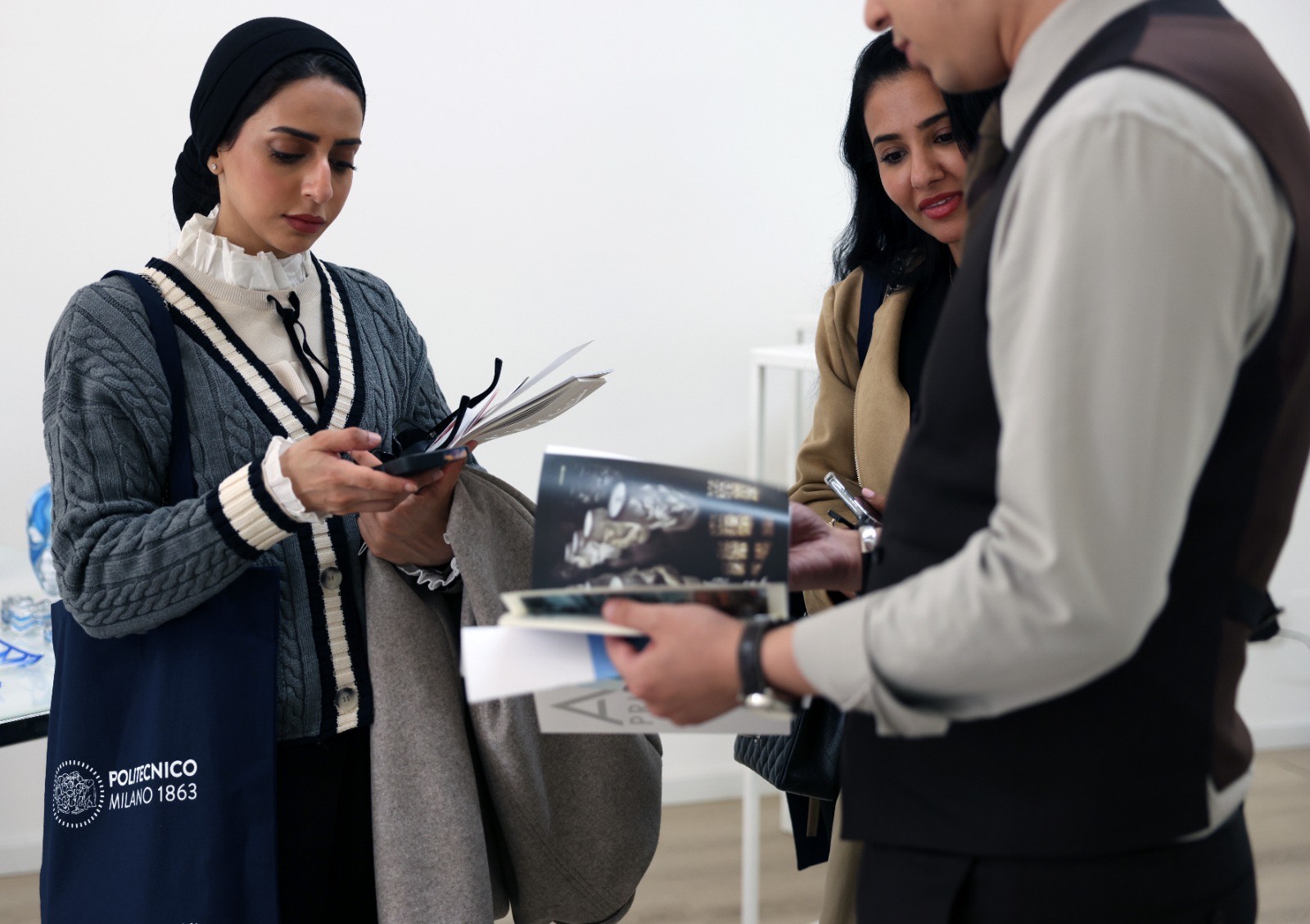
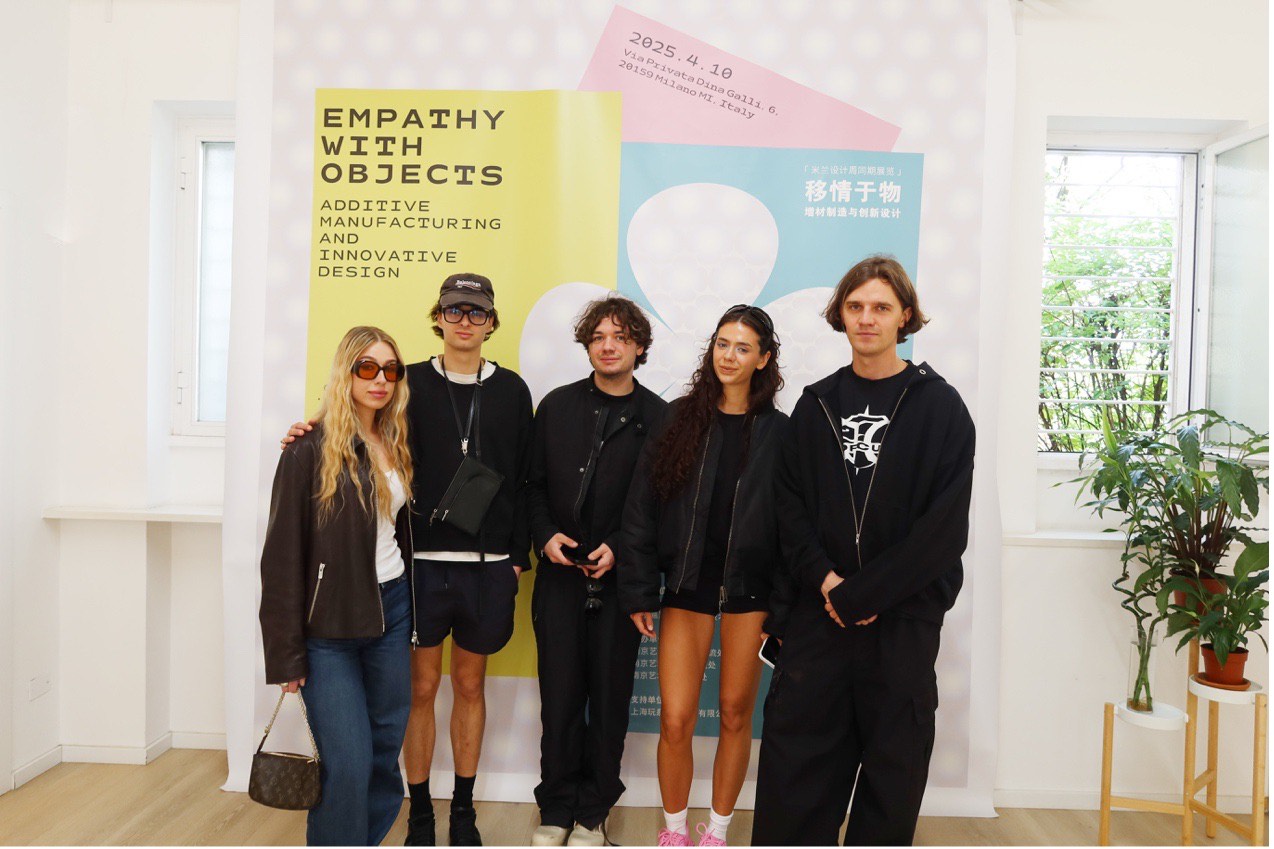
During the exhibition, it not only captured the attention of numerous global design professionals and enthusiasts, but also attracted Chinese students studying at world-class universities who came for meaningful exchanges. The School of Design at Nanjing University of the Arts further solidified academic collaboration with Politecnico di Milano, reaching consensus to expand international education programs and build better platforms for both domestic and international faculty and students.
The Milan Design Week also provided opportunities for exchanges with artists from Brera Art District, creating new pathways to showcase Chinese design and design education on the world stage. This exhibition successfully facilitated cross-cultural dialogue while amplifying China’s growing influence in global design discourse.


NUA’s Journey at Milan Design Week represents far more than a professional showcase of design achievements—it marks a strategic milestone in our internationalization vision. Through academic exchanges with Europe’s premier institutions, we will:
- Enrich our “Double First-Class” initiative with global perspectives
- Pioneer new models for cultivating artistic talent worldwide
- Demonstrate Chinese design innovation through tangible practice
- Contribute Eastern wisdom to global sustainability challenges
This is where tradition meets tomorrow. Stay tuned for our next chapter!
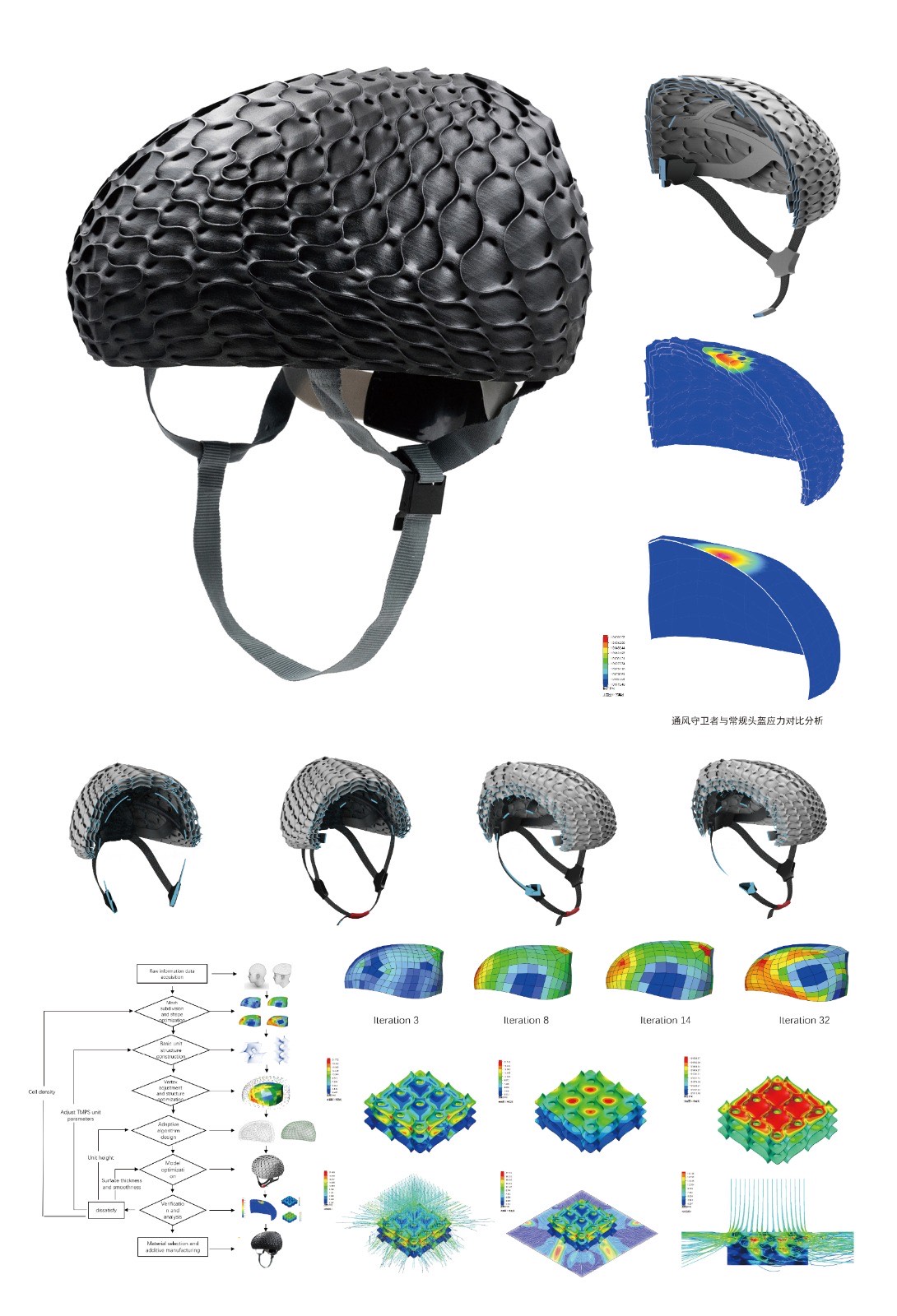
Design Description:
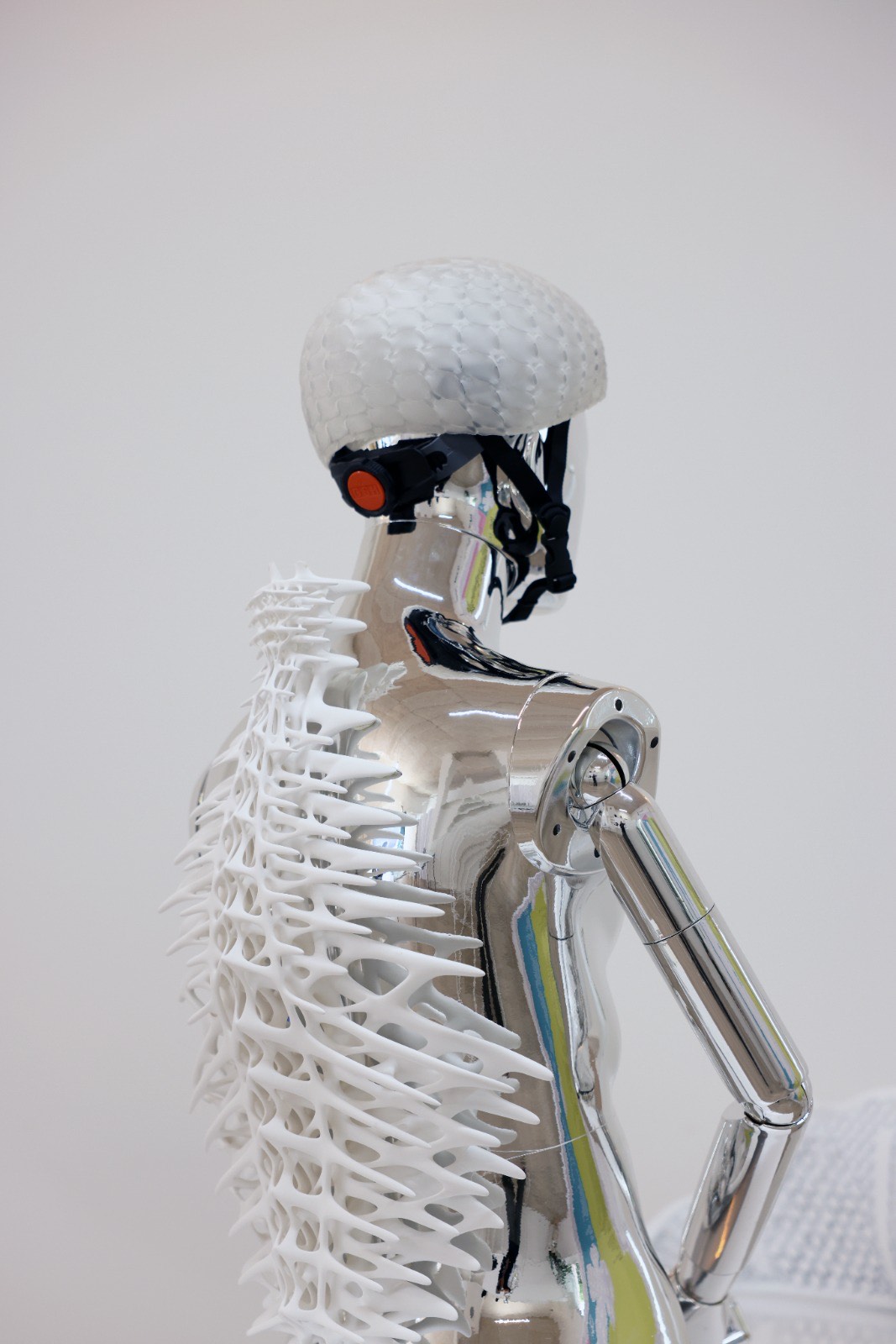
Ventilation Guardian aims to resolve the inherent conflict between ventilation and anti-penetration performance in traditional helmets, addressing both demands while enhancing impact absorption and dispersion capabilities. Inspired by the microscopic structure of the green vein butterfly’s wings, the design employs triply periodic minimal surfaces (TPMS) and parametric algorithms to generate an integrated laminated structure.
Internally, nonlinear channels create a porous framework, enabling airflow through the thin-shell architecture to ensure omnidirectional ventilation.
The adaptive channel geometry and angular orientation prevent sharp objects from penetrating through ventilation openings, while external vents are directed toward the helmet’s rear to eliminate frontal puncture risks during impacts. The helmet’s main body utilizes a multi-layer lamination and elastic cavity design, combined with nylon’s exceptional toughness.
Under external force, each thin-shell layer elastically deforms to absorb and distribute impact energy across hierarchical levels, progressively mitigating and delaying force transmission. This innovation not only balances ventilation and penetration resistance but also significantly improves the helmet’s overall impact resilience.
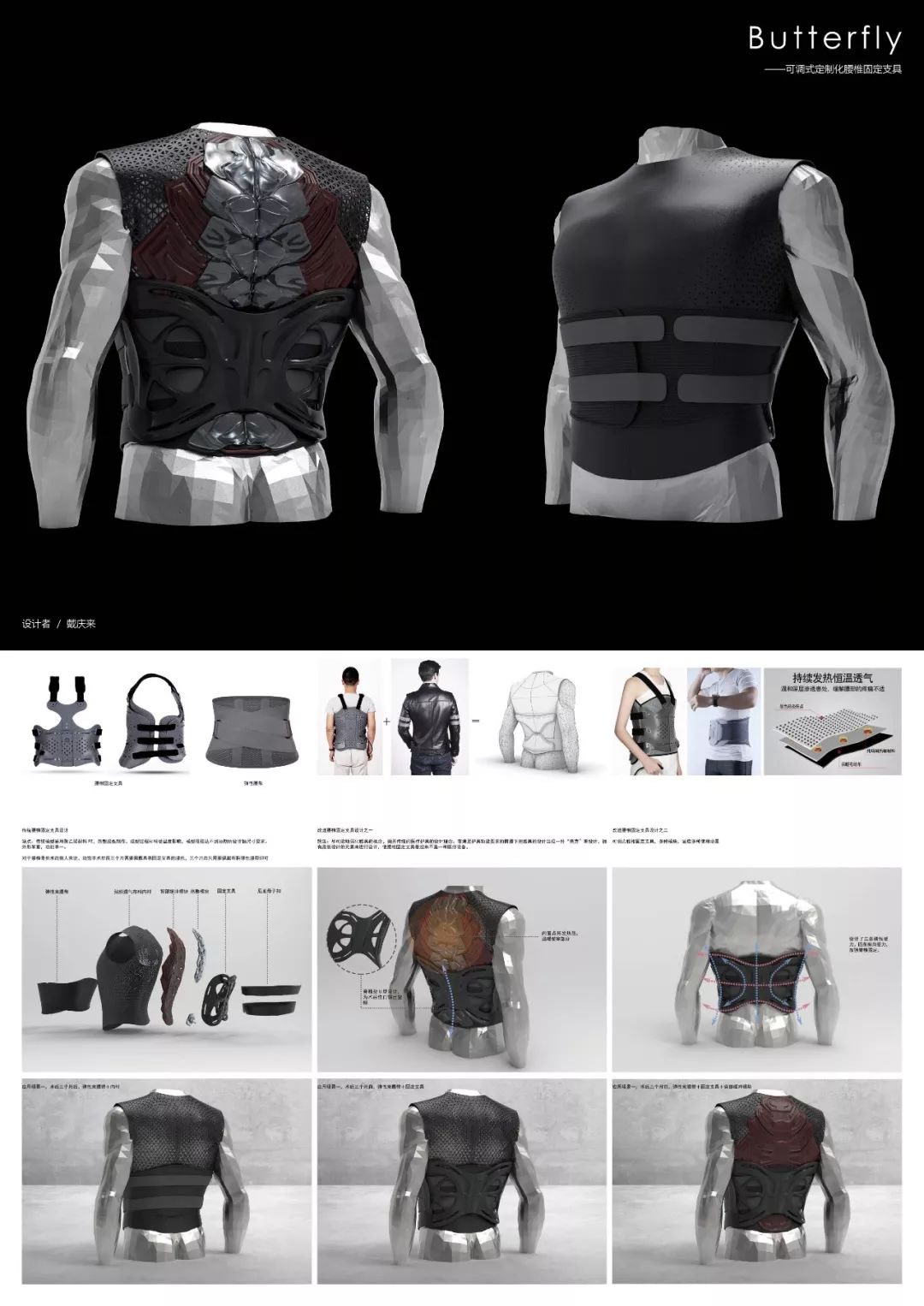
Design Description:
Butterfly reimagines the traditional framework of medical braces by seamlessly merging the functionality of a lumbar support orthosis with contemporary fashion. Moving beyond conventional medical aesthetics, the design conceptualizes the brace as a “jacket,” integrating elements of fashion design to transform the lumbar support into a wearable piece that balances practicality with modern, stylish expression.While fulfilling core medical requirements, the brace’s structure and detailing prioritize ergonomic harmony, featuring streamlined and three-dimensional contours that align with the body’s natural curves.
This approach intentionally diminishes the clinical appearance of the device, repositioning it as a discreet, everyday protective garment. Through innovative material choices and tailored construction, Butterfly transcends its role as a medical aid, offering users a sophisticated, comfortable solution that integrates effortlessly into daily life.
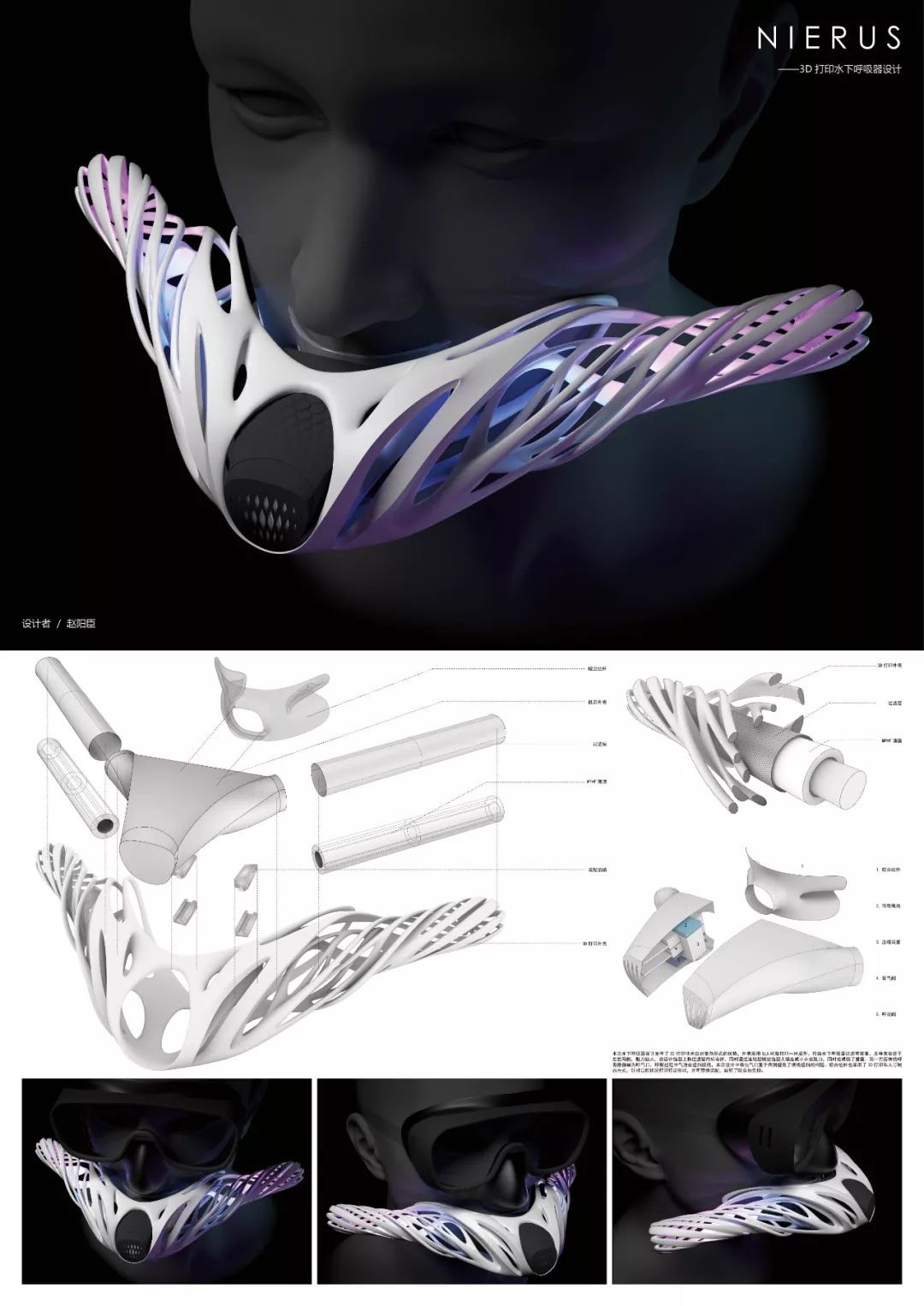
Design Description: NIERUS
In its structural design, NIERUS significantly reduces the bulk of the underwater respirator by ingeniously bending the filtration tube backward and incorporating a streamlined hollow structure, enhancing both wearability and aesthetic appeal. The design fully leverages the advantages of 3D printing technology for complex geometries: the casing is monolithically printed with high-performance SILA resin, ensuring structural durability and lightweight properties.
Additionally, the occlusion component is custom-fabricated via 3D printing to precisely match the user’s anatomy, improving stability and sealing performance.Functionally, this underwater respirator not only reduces the weight of traditional equipment but also optimizes airflow dynamics and respiratory efficiency through its unique form, enabling greater flexibility and effectiveness in aquatic environments.
The application of 3D printing technology allows for extensive customization, enabling personalized adjustments to meet diverse needs. By merging innovative design with advanced manufacturing, NIERUS achieves new heights in aesthetics, functionality, and comfort, offering a groundbreaking solution for modern underwater activities.


Design Description: New Desktop
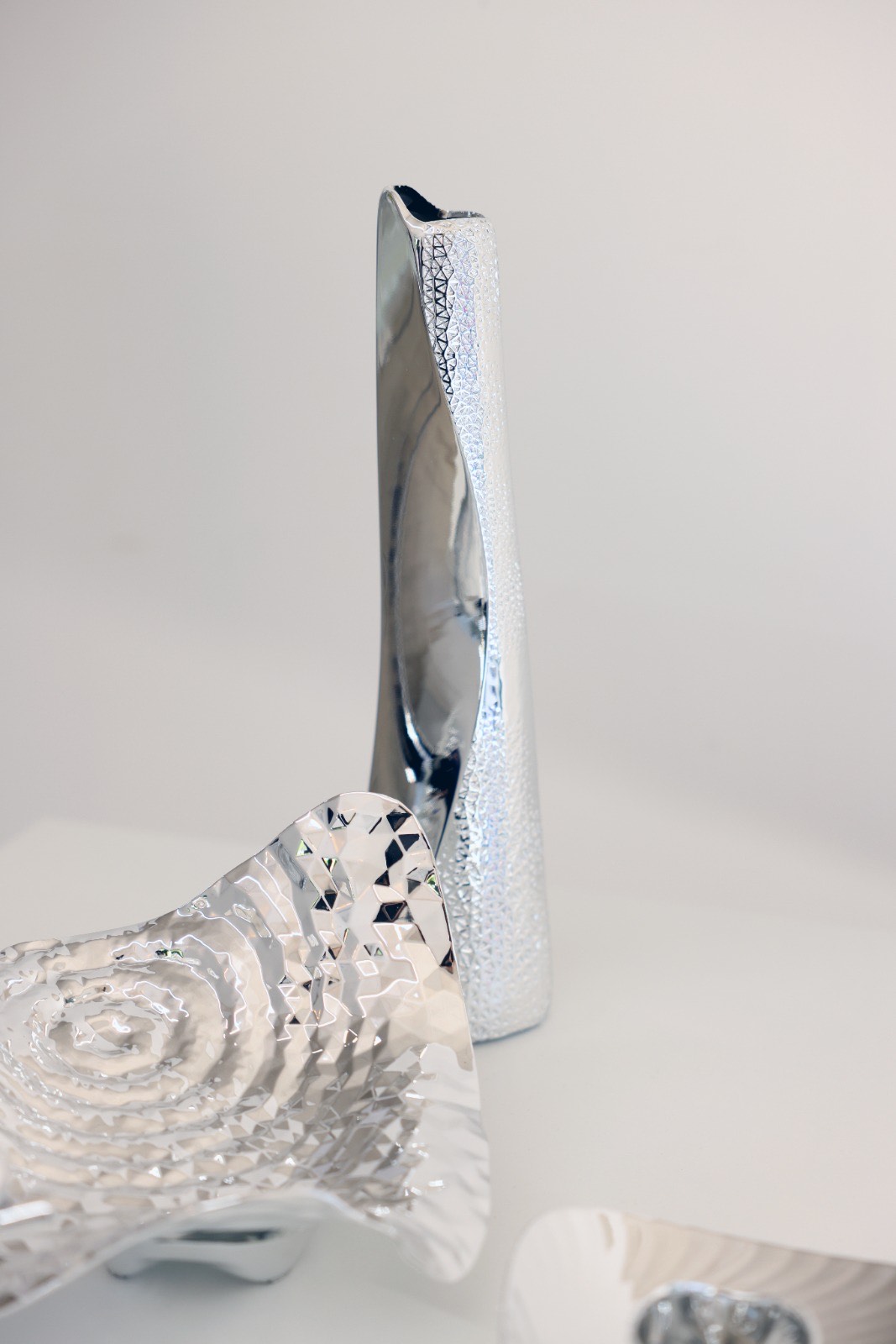
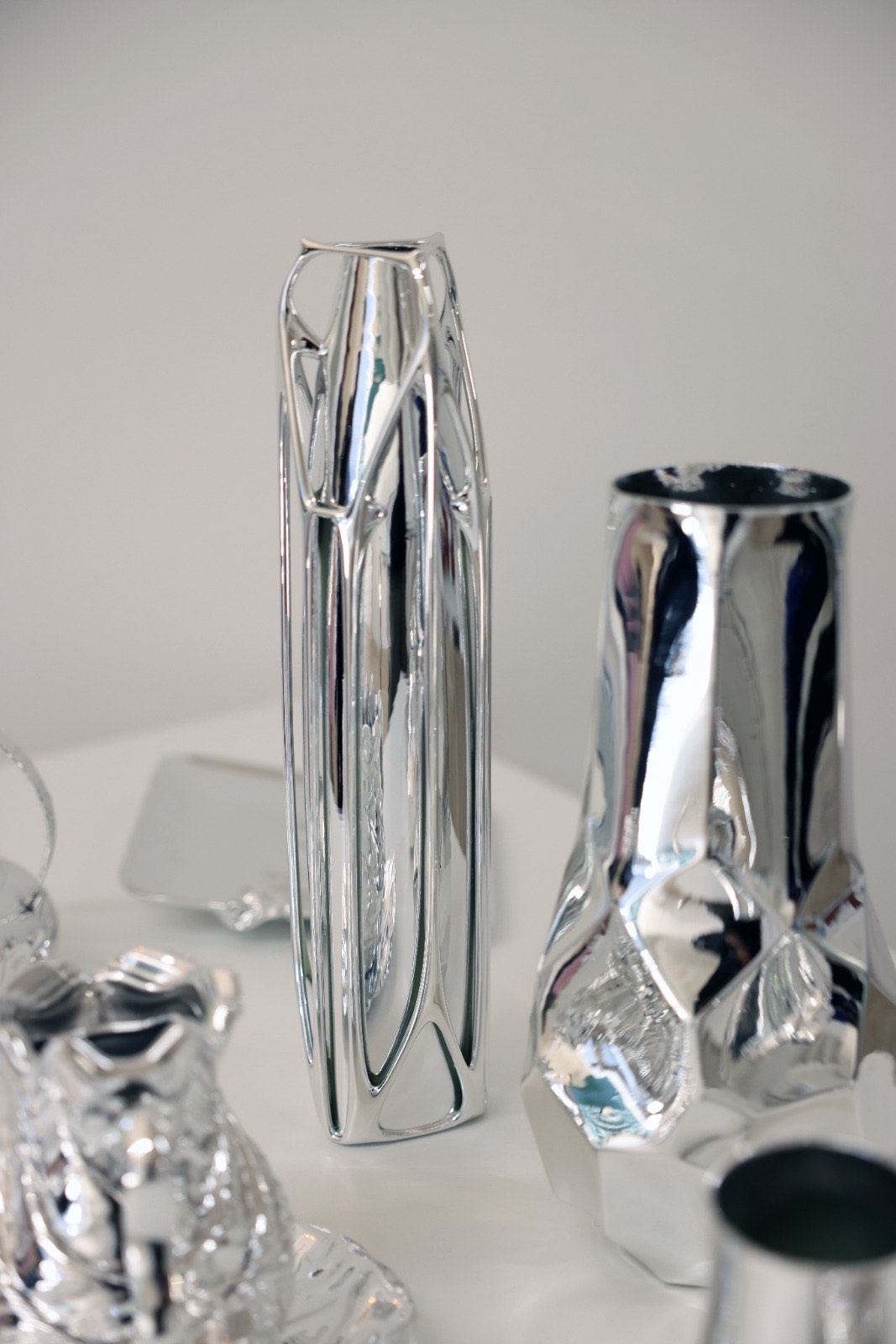
This work explores innovative pathways for digital technology to engage with cultural heritage preservation through the fusion of parametric design and Chinese traditional aesthetics. The design process employs digital modeling and algorithmic generation to merge organic curves inspired by nature with intricate geometric forms, resulting in vessels characterized by fluid, nonlinear structures.
Drawing inspiration from classical Chinese artifacts—such as tea ware, banquet utensils, and ritual vessels—the pieces reinterpret cultural motifs like landscape imagery, cultural-semiotic symbols, and ritualistic elements through a contemporary technological lens.In production, 3D printing and digital fabrication technologies enable the precise realization of complex geometries, while the innovative use of contemporary materials enhances textural refinement and intricate detailing.
Each piece transcends traditional silhouettes, embodying a harmonious blend of craftsmanship and digital precision that highlights the unique role of modern technology in cultural reinvention.This collection represents a pioneering exploration at the intersection of computational design and Chinese aesthetics. By preserving the essence of Eastern cultural heritage while infusing it with modern vitality, New Desktop exemplifies the symbiotic relationship between tradition and innovation, as well as the transformative potential of uniting manual artistry with digital advancement.
Organizer
Nanjing University of the Arts
Co-organizers
School of Design, Nanjing University of the Arts
Nanjing Kenyo Digital Additive Technology Research Institute
Collaborating Units
International Office, Nanjing University of the Arts Graduate School, Nanjing University of the Arts Research Office, Nanjing University of the Arts
Supporting Unit
Shanghai Wanquan Cultural Communication Co., Ltd.
Featured Programs & Platforms
- Phase III of Jiangsu Higher Education Brand Specialty Development Project(Visual Communication Design, Craft Art)
- Research on Chinese Lifestyle Aesthetics and Its Contemporary DesignTheory & Practice
- Jiangsu University Cultural Creativity Collaborative Innovation Center
- Experimental Art Center, Nanjing University of the Arts
- Art-Science Innovation Research Center, School of Design, NanjingUniversity of the Arts
- Cultural Heritage and Digital Inheritance Innovation Platform, NanjingUniversity of the Arts
Coordinator | Zhou Qing
Planner | He Fang
Execution | Xu Zhecheng, Tao Feifei
Copywriter | Lu Jaime
Editor | Li Ziyi
Proofreader | Xu Xinyan
Reviewers | Zhang Jian, Jiang Jie

